
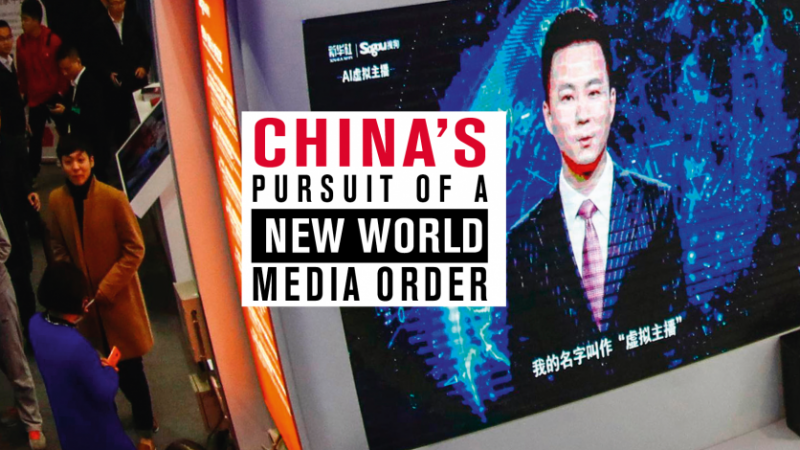
 China’s crackdown on press freedom poses a direct hazard
to democracies worldwide, press freedom watchdog Reporters Without Borders (RSF) said in a document launched
on March 25, 2019.
China’s crackdown on press freedom poses a direct hazard
to democracies worldwide, press freedom watchdog Reporters Without Borders (RSF) said in a document launched
on March 25, 2019.The 52-page report titled “China’s Pursuit of a New World Media Order”, outlines the methods that Beijing has sought to exert its political influence on international media in order to deter criticism and poor insurance – from exporting its censorship model to autocratic states to silencing dissidents through intimidation.
“The motive of the document is to stir a reaction,” Cédric Alviani, director of RSF’s East Asia bureau, told HKFP. “It is solely the tip of the iceberg of China’s have an impact on on media throughout the world. That is what makes it chilling.”
The record condemns Chinese President Xi Jinping as an “enemy of democracy, normal values, human rights and press freedom.”
“In the spirit of the Beijing regime, journalists are now not intended to be a counter-power but alternatively to serve the propaganda of states,” Christophe Deloire, secretary-general of RSF, said. “If democracies do now not resist, ‘Chinese-style’ propaganda will progressively invade the world’s media, competing with journalism as we understand it.”
In a part on Hong Kong, RSF said that press freedom in the metropolis had been eroded, citing ties between Hong Kong media owners with mainland political bodies, threats from the Communications Authority to discontinue media licenses and the sale of English-language newspaper South China Morning Post to Chinese internet commerce employer Alibaba in 2016.
It said that after the purchase, “…around 30 participants of its workforce right now left. They have been rapidly changed by using reporters with a reputation for being docile or pro-Beijing, and its editorial insurance policies did not take lengthy to change.
0 Comments